
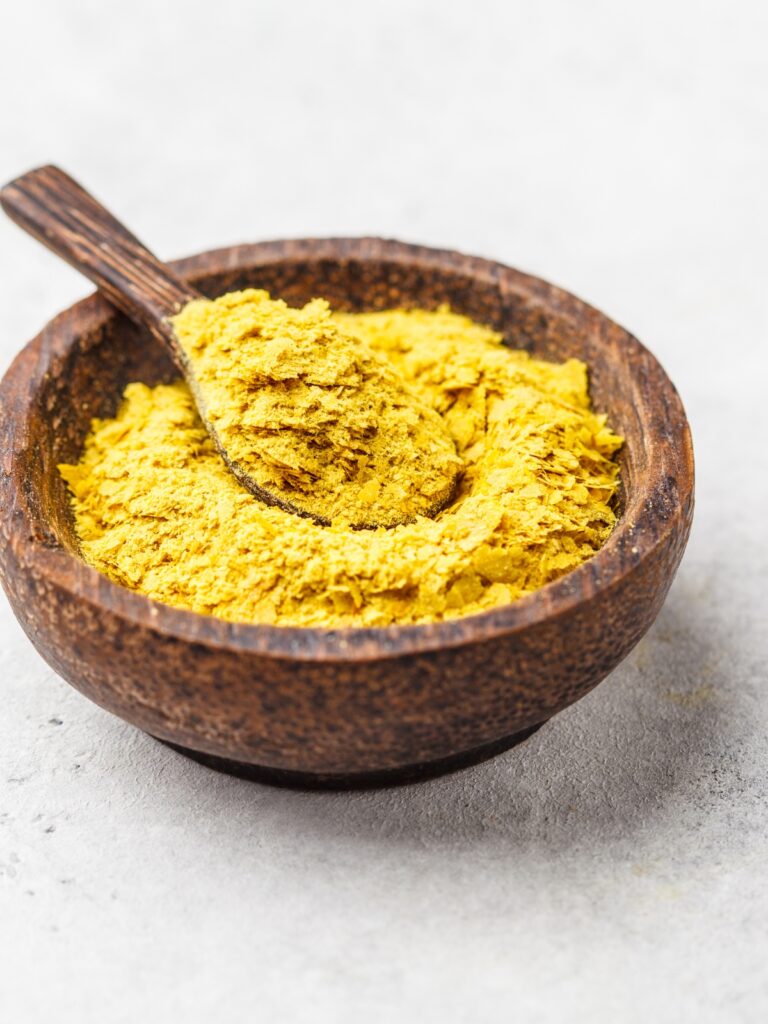
Nutritional yeast is the secret, super-powered seasoning you need to be sprinkling into your recipes. This yellow, flaky seasoning has an impressive nutrient profile. Packed with vitamins, minerals, and protein, it’s a delicious way to enhance your meals while also boosting your health.
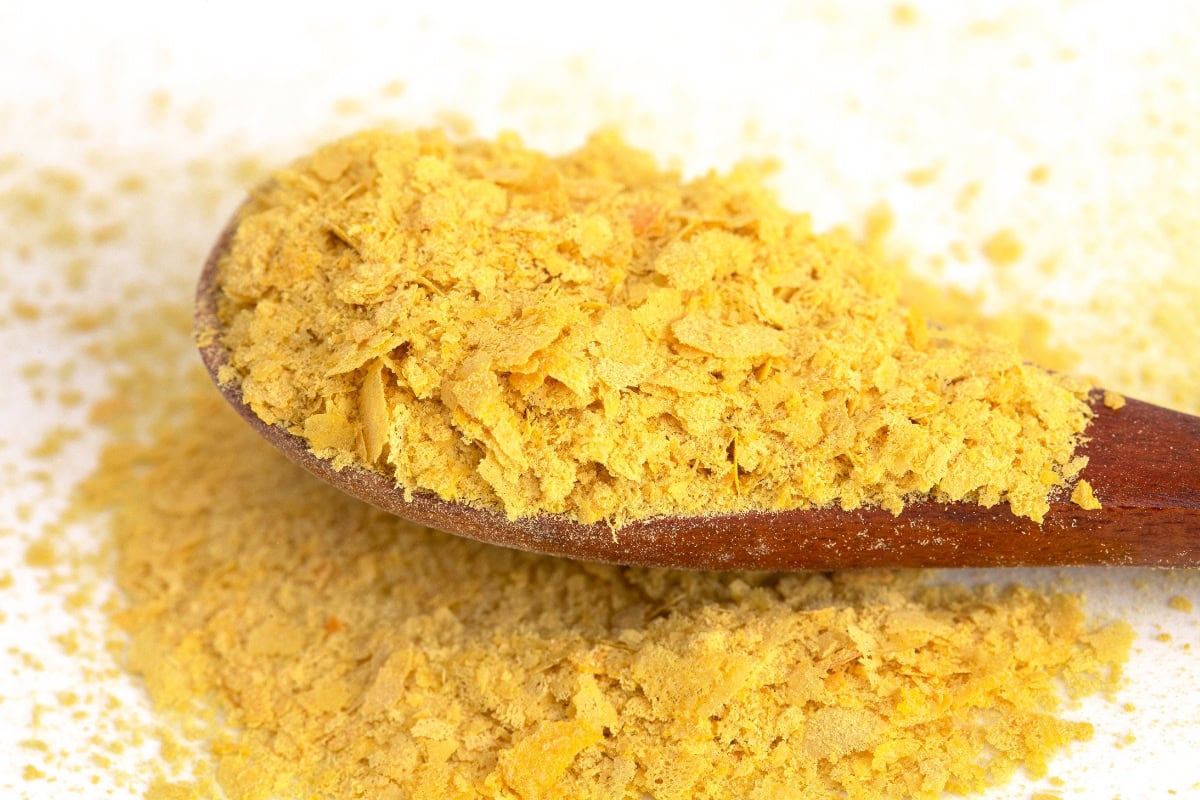
What is Nutritional Yeast?
Nutritional yeast is an inactivated (non-living) form of Saccharomyces cerevisiae yeast.
❓What’s the difference between nutritional yeast and active yeast?
Nutritional yeast and active yeast are made from the same strain of yeast, but nutritional yeast is the inactive form. Nutritional yeast is grown in energy-rich molasses and then deactivated. Active yeast is live yeast that ferments sugars, allowing it to grow and reproduce; it is typically used for baking and brewing.
Nutritional yeast is sold as a dietary supplement and food ingredient online or at many food stores.

What does nutritional yeast taste like?
Nutritional yeast has a savory, cheesy flavor that’s often compared to Parmesan cheese. It also has a slightly nutty and umami taste, so it’s great for enhancing savory flavor in many recipes.
What are the Benefits of Nutritional Yeast?
Nutritional yeast has a high protein content with lots of B vitamins and minerals. You can also find it fortified with extra vitamins such as Vitamin B12.
Protein
Nutritional yeast is rich in protein with a well-balanced amino acid profile, including all essential amino acids.
The protein content of nutritional yeast varies among brands due to factors such as the specific yeast strain used, growing conditions, and processing methods. These differences can lead to variations in nutritional profiles and overall protein levels.
For example, Bob’s Red Mill Nutritional Yeast has 4g of protein per 2 tbsp. Bragg’s Nutritional Yeast has 5g of protein per 2 tbsp. Anthony’s Nutritional Yeast has 8g of protein per 2 tbsp — wow!
Vitamins and Minerals
B-vitamin content increases during yeast fermentation, making nutritional yeast a particularly good source of B-complex vitamins (B1, B2, B3, B5, B6, B7, B9, B12). B12 is particularly crucial for those on plant-based diets, as they tend to get less of it because meat is absent from their meals.
Nutritional yeast also contains several minerals like phosphorus, potassium, magnesium, zinc, iron, calcium, and sodium.
Fiber
Another great benefit of nutritional yeast is its fiber content, which supports digestive health. Fiber helps keep you feeling full and promotes a healthy digestive system.
The Low-Calorie Sprinkle
Nutritional yeast is also low in calories and free from added sugars, making it an easy way to add flavor to your dishes without a ton of extra calories. Read below all the ways to use nutritional yeast!
Ways to Use Nutritional Yeast

1. Seasoning
- Sprinkle it on popcorn for a cheesy flavor.
- Use it to season soups and stews. Add extra cheesiness to my vegan broccoli cheddar soup
2. Savory Dishes
- Incorporate it into risottos and grain bowls.
- Stir it into stir-fries for added depth of flavor.
- Add it to a tofu scramble to get that cheesy flavor.
3. Snacks
- Use it to enhance cheesy flavor in my creamy vegan queso (without cashews!)
- Sprinkle it into a yummy, healthy dip like my buffalo chickpea dip
- Make your own homemade “Bitchin’ Sauce” that uses nutritional yeast for some cheesiness and savory flavor.
7. Salad Toppings
- Sprinkle over salads for extra flavor and nutrients.
- Use it in salad dressings for a cheesy kick.
Have you tried nutritional yeast? How do you use it? Comment below!
This information is intended for educational purposes only and should not be considered medical advice. We strongly recommend consulting your healthcare provider before making any changes to your health regimen.
