

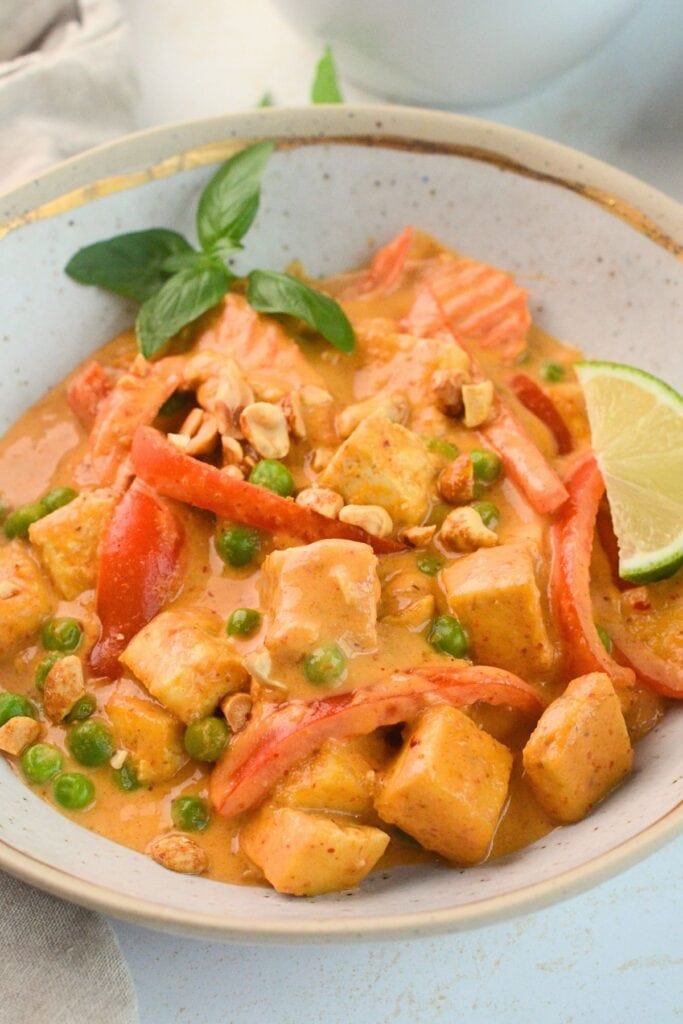
Panang curry is my most ordered dish anytime I’m at a Thai restaurant, and after years of getting it again and again, I finally decided to make a version at home. Of course, homemade Panang curry could be quite complex – but that’s not my goal when I make recipes. This Panang curry with tofu still hits all the same notes we love (peanutty, rich, creamy, coconutty) but won’t have you running to 5 grocery stores to find the ingredients. The one ingredient that’s a little more unique is Panang curry paste – but it’s a must to make this recipe – and you’ll be so happy you bought it because you will want to use it over and over again. After taste testing this recipe at home over 5x, I perfected the creamy panang sauce: secret is frying the curry paste in the coconut cream, garlic, and ginger. It made my husband stop mid-bite and say “Wow, this tastes so much richer than before.”
I can honestly say, I think this is my favorite curry recipe I’ve ever made and I’m almost certain you are going to be so impressed with yourself that you made this in your own kitchen.
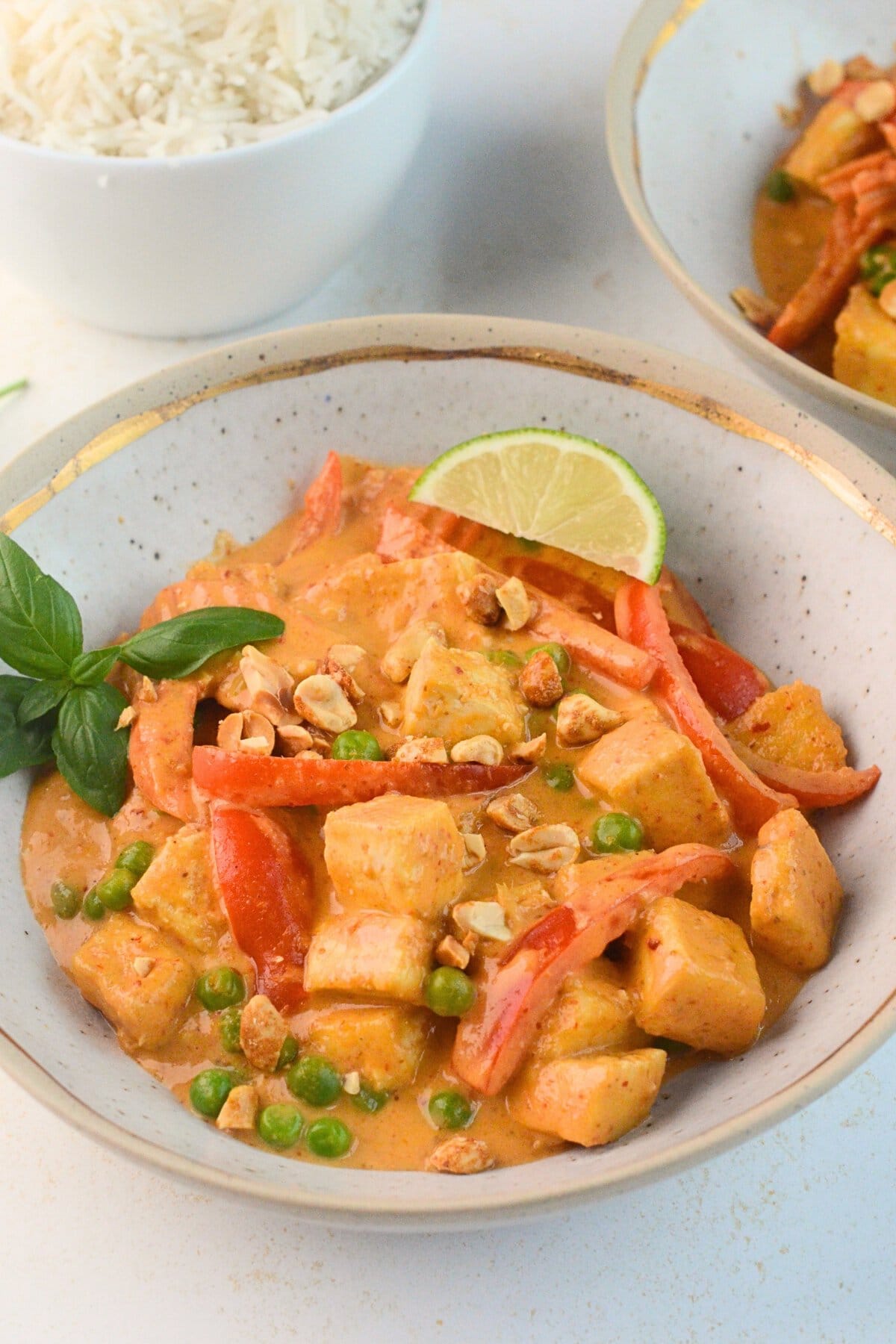
What makes this recipe different
A lot of versions just dump the curry paste straight into coconut milk and simmer, which gives you a flat sauce (and honestly, the flavor tastes kind of raw). I fry the paste first in the thick coconut cream until it darkens, the same technique that gives restaurant curry that deep flavor instead of tasting raw and sharp. I also bake my tofu instead of frying it, so you get all that crispy texture without babysitting a pan of hot oil (and it’s a little healthier too 😉). And instead of ground peanuts, I use peanut butter, which melts right into the sauce for that same nutty richness without an extra step of grinding or blending anything.
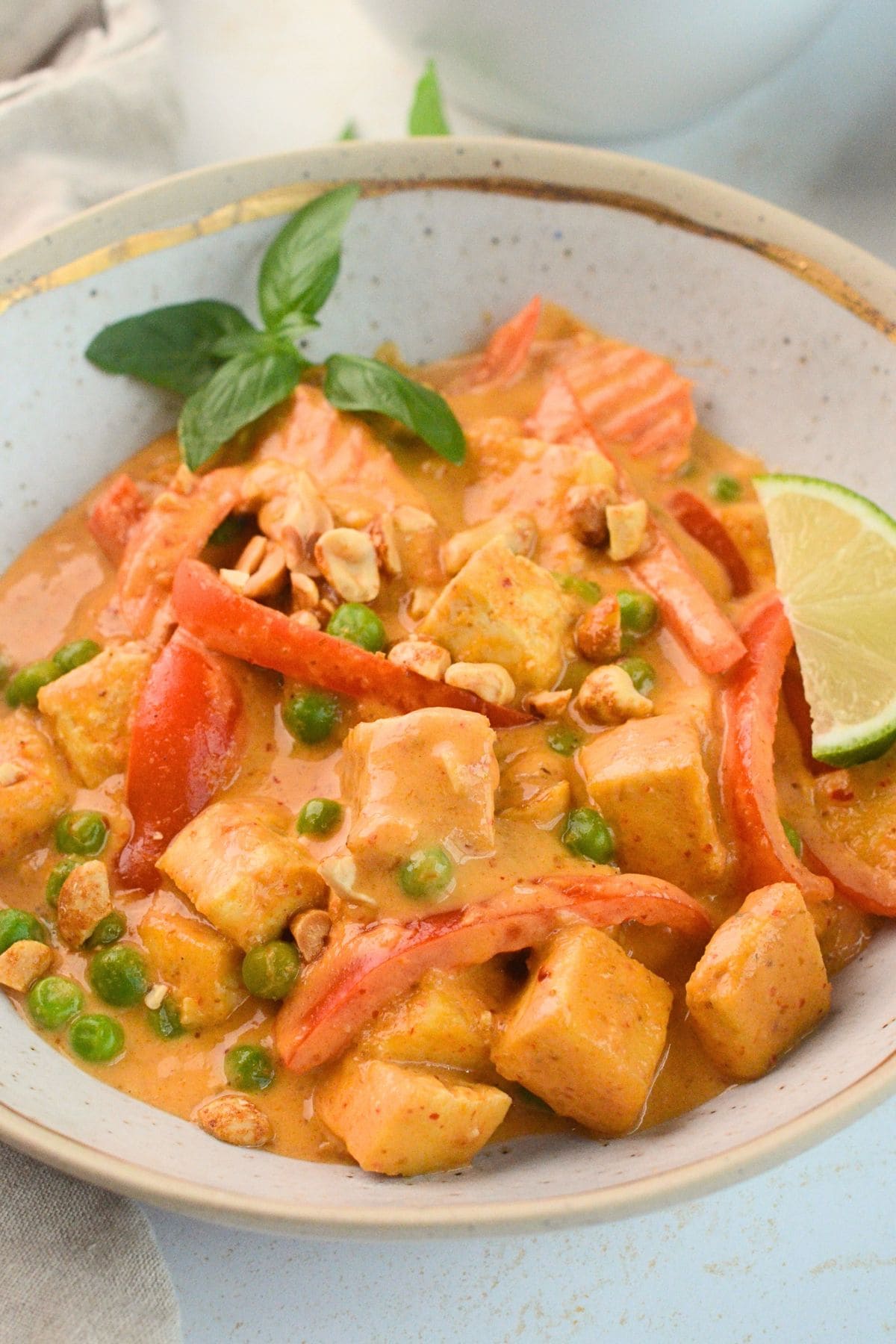
Panang Curry Ingredients
- Extra firm tofu – We will bake our tofu to get it a little crispy before adding it back to the dish.
- Cornstarch – adds some crispiness to the tofu
- Garlic powder – adds an extra layer of savory flavor to the tofu coating.
- Salt – just a sprinkle to season the tofu
- Neutral oil – for crisping the tofu and sautéing the veggies. Avocado or vegetable oil both work great.
- Red bell pepper – for color, crunch, and a little natural sweetness.
- Carrots – adds texture and a subtle earthy sweetness to balance the rich sauce.
- Garlic and fresh ginger – the aromatic base of any good curry. Don’t skip these.
- Panang curry paste – this is where all that bold Thai flavor comes from. Brands vary in spice level, so start with less if you’re heat sensitive. I like this Panang curry paste on Amazon – but it definitely has a little heat to it so use less if you want it less spicy.
- Full-fat coconut milk – makes the sauce rich and creamy. Don’t shake the can before opening.
- Creamy natural peanut butter – this is what makes Panang curry so unique. It adds richness and a subtle nutty flavor to the sauce.
- Soy sauce or tamari – for a savory, umami boost. Use tamari to keep this gluten-free.
- Maple syrup or brown sugar – balances the heat and saltiness with a touch of sweetness.
- Lime juice – brightens up the whole dish right at the end.
- Frozen green peas – an easy way to add a pop of color and veggies without extra prep.
Serving Sides/Toppings (Optional)
- Cooked rice of choice – jasmine rice is the classic pairing for soaking up the sauce.
- Fresh lime – for a little extra brightness at the table.
- Thai basil or regular basil – adds a fresh, fragrant finish.
- Chopped peanuts – for crunch and a little extra nod to the peanut butter in the sauce.
How to Make Panang Curry with Tofu
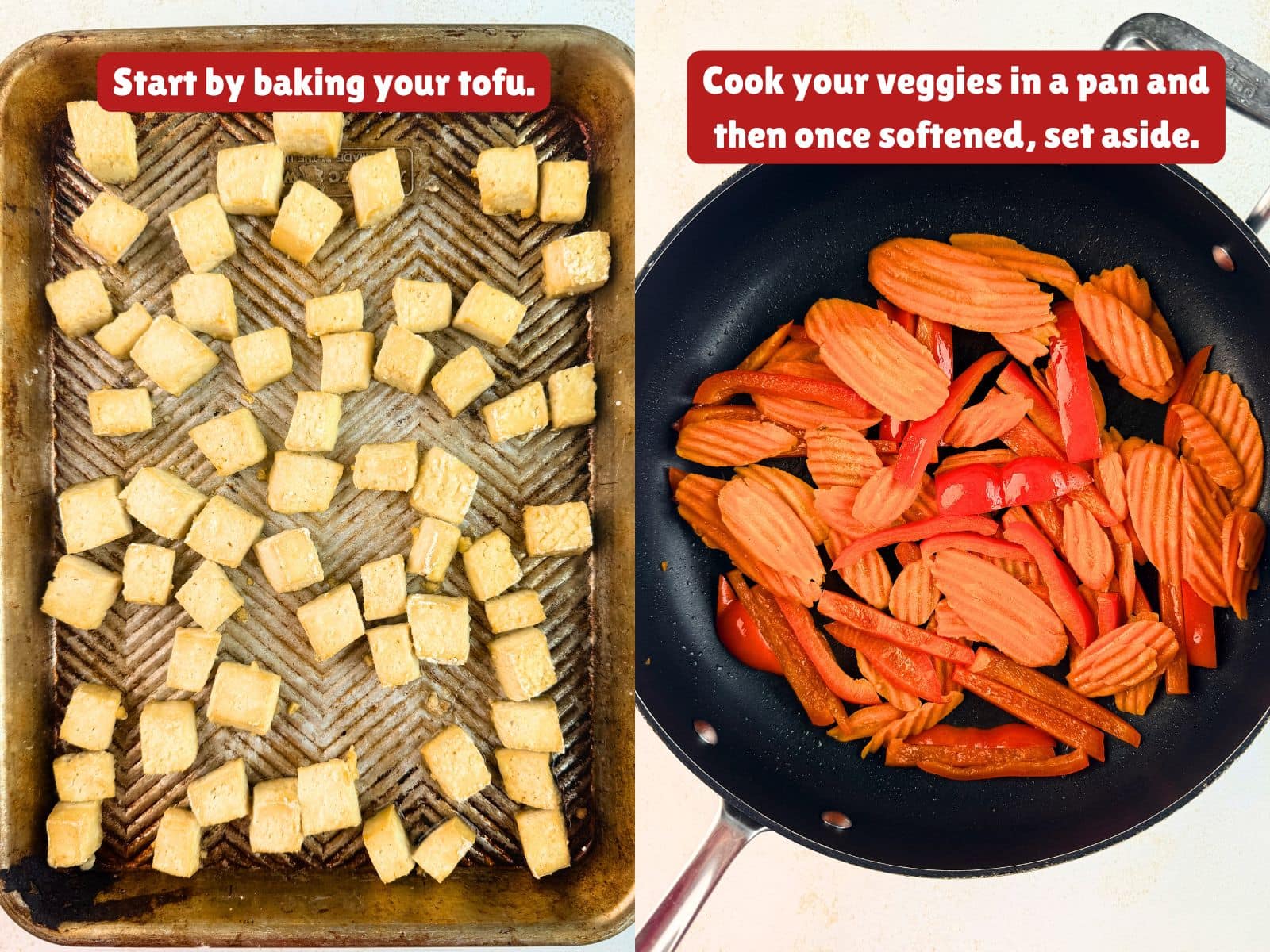
1. Bake the tofu
Preheat your oven to 400°F and line a baking sheet with parchment paper (or can just use a little oil). Toss your pressed tofu cubes with cornstarch, garlic powder, and a sprinkle of salt until evenly coated. Spread out in a single layer on the baking sheet, making sure the pieces aren’t touching. If using oil method, make sure each cube has come in contact with some oil so it does not stick. (FYI I like avocado oil because its high heat).
Bake for 20-25 minutes, optional – flipping halfway through, until golden and crispy.
2. Cook the veggies
Add a small amount of oil to a large skillet. Add the sliced bell peppers and carrots and cook for about 7-10 minutes, until just starting to soften but still a little crisp. Remove and set aside.
Allie’s Tip: You want these veggies to still have some crisp. They will simmer later in the sauce.
3.Start the aromatics in coconut cream
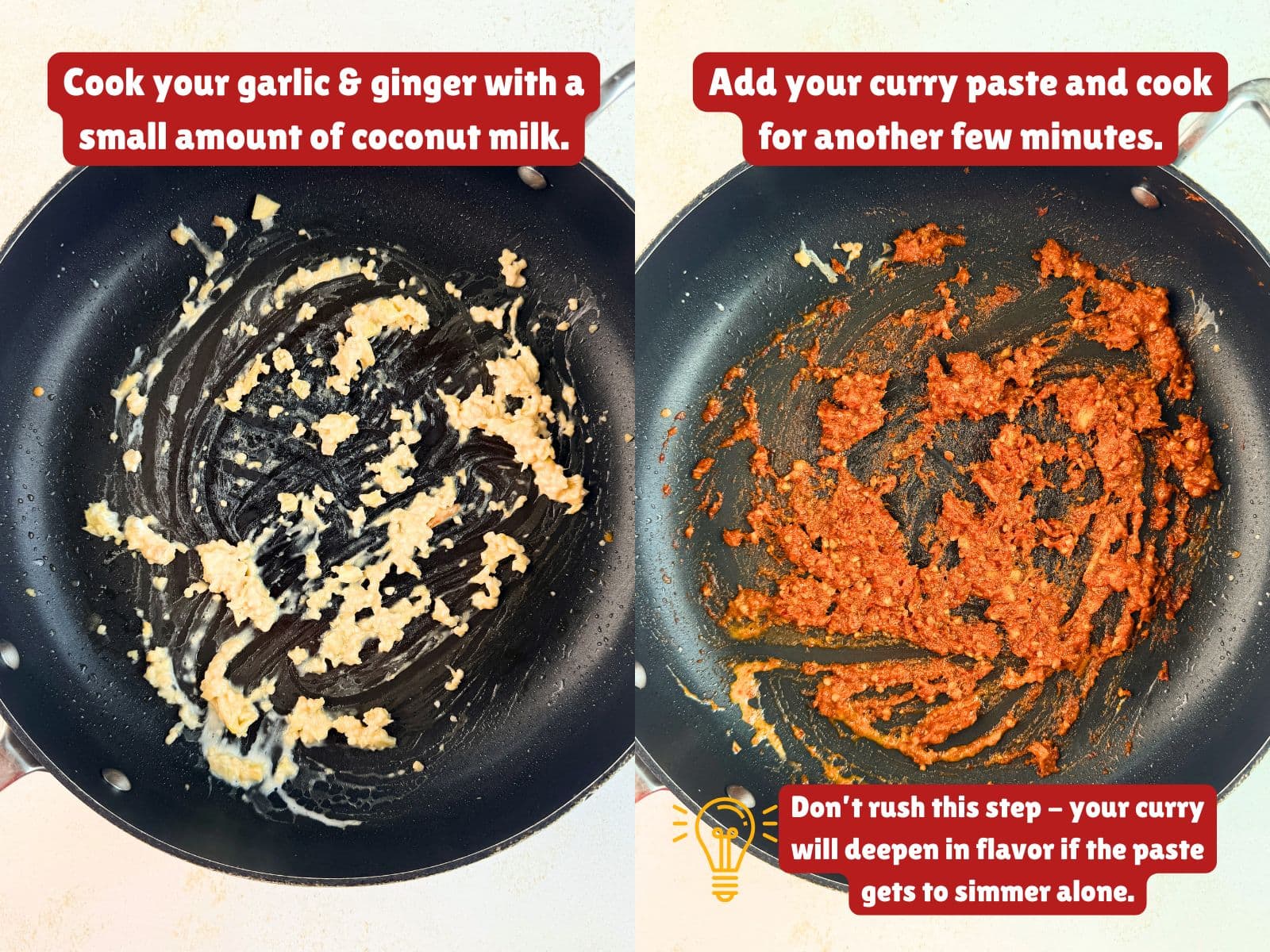
Without shaking the can, open your coconut milk and scoop out just a few tbsp of the thick cream on the top. Add it to the pan along with the garlic and ginger, and cook for about 30 seconds until fragrant.
4. Fry the curry paste
Add the Panang curry paste directly to the pan and fry it like you would tomato paste, stirring constantly and pressing it against the pan. Cook for a few minutes until the paste darkens.
Allie’s Tip: This is the step that’s important to a good curry. Don’t rush it – but also watch closely to make sure it doesn’t burn.
5. Build the sauce
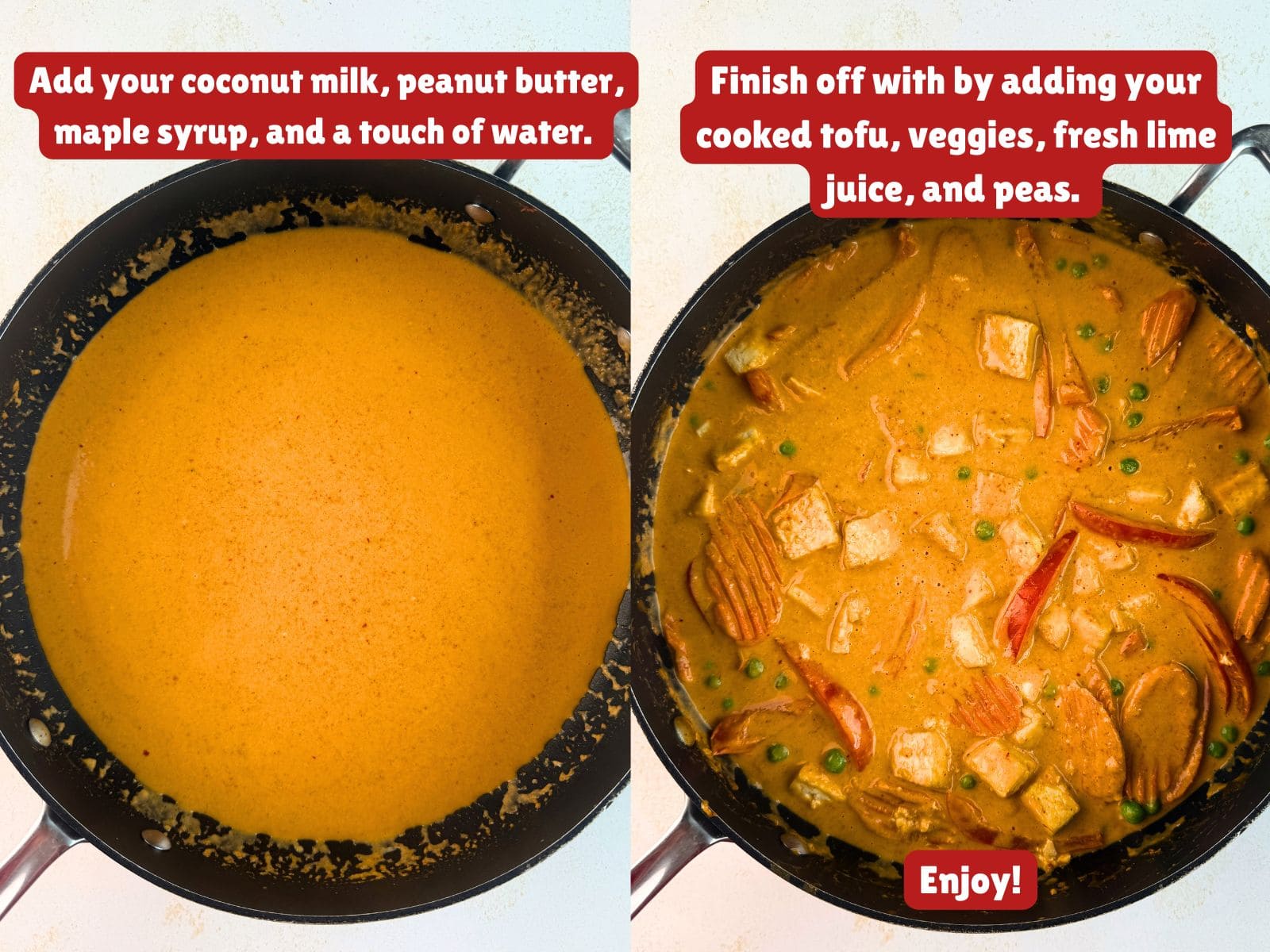
Once the paste has darkened slightly, pour in the rest of your coconut milk a little at a time, stirring to loosen the fried paste as you go. Whisk in the peanut butter, soy sauce, and maple syrup. Add in a small amount of water. Let it simmer gently until the sauce thickens and coats the back of a spoon. If it gets too thick, thin it out with a splash of water again.
Allie’s Tip: Keep the heat gentle here. If it boils too hard, natural peanut butter can separate and turn grainy instead of silky.
6. Finish it off
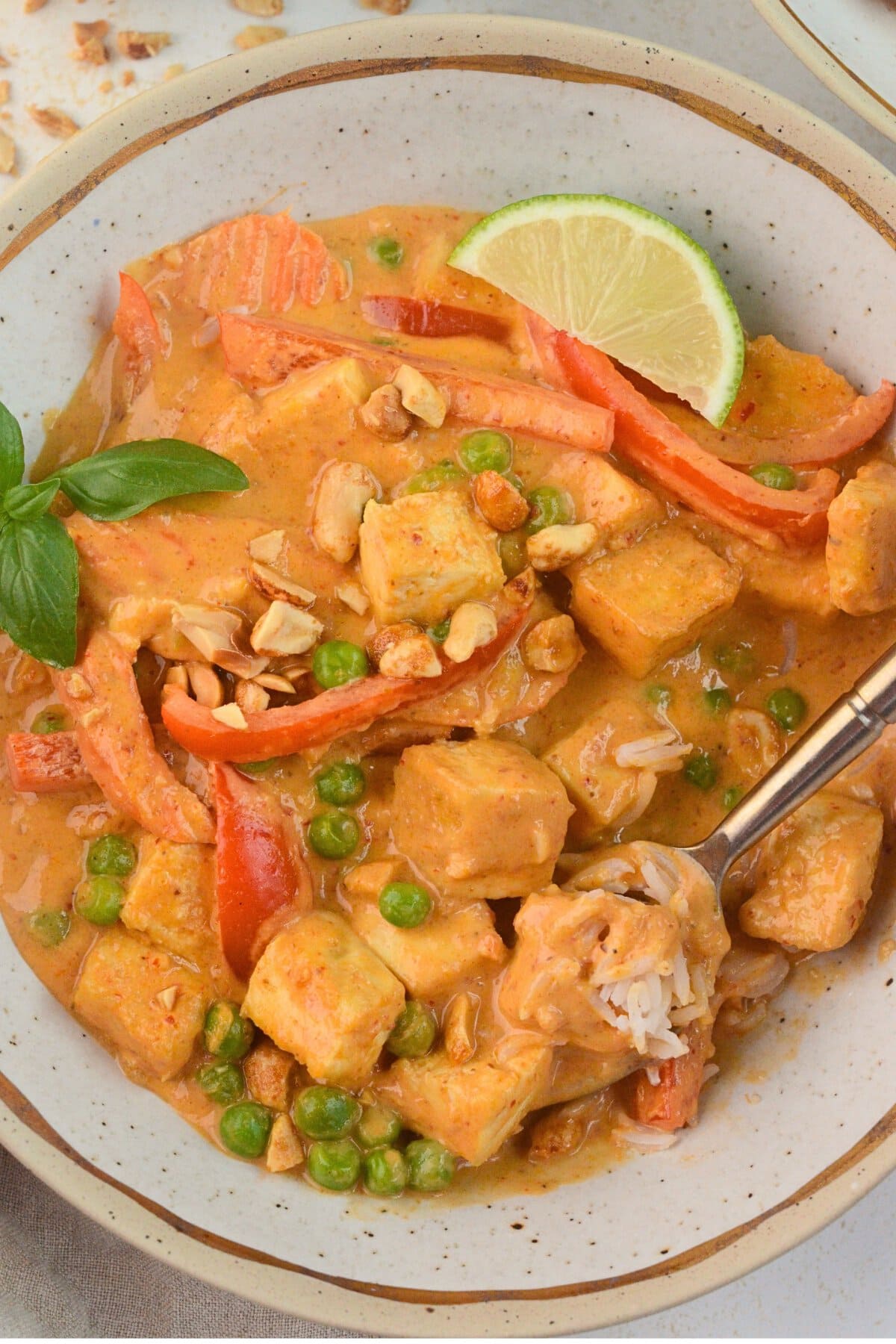
Stir in the frozen peas, your reserved veggies, the crispy tofu, and the lime juice. Simmer for another 2 minutes, just until the peas are heated through. Taste and adjust with more salt, lime, or sweetness as needed.
Allie’s Tip: Taste test before your serve it. Curry paste brands can vary a lot of spice and depth of flavor. You may want a little more lime – or even maple syrup or brown sugar depending on your flavor preference.
How to Store Leftover Panang Curry
Panang curry is great for leftovers (in fact, it may taste even better the second day). I store it separately from the rice (no peanut topping either) in the fridge in a glass container for up to 4 days.
You can also freeze it and it’s still great 2-3 months later.
Common Questions
Panang is thicker, sweeter, and nuttier than red curry, thanks to the addition of peanuts or peanut butter. Red curry tends to be thinner and spicier, more of a brothy sauce than a coating one.
It’s typically milder than red or green curry. The peanut and coconut milk mellow out the heat from the curry paste, though spice level still depends on the brand of paste you use.
It can be, as long as you use tamari instead of soy sauce and double-check your curry paste brand, since some contain shrimp paste or gluten-based fillers.
Our Favorite
Recipes

Subscribe for Free Recipes!
Get new recipe ideas from Naturallie Plant-Based straight to your inbox.
Easy Panang Curry with Tofu
Save This Recipe
Want to get this recipe in your email? Just enter your email below and get it now along with new recipe updates!
Equipment
Ingredients
- 14 oz extra firm tofu drained, pressed and cubed into 1 inch pieces
- 1 tbsp cornstarch
- 1/2 tsp garlic powder
- sprinkle of salt
- 2 tablespoons neutral oil divided
- 1 medium red bell pepper sliced
- 1 medium orange bell pepper sliced
- 2 medium carrots sliced thin on the diagonal
- 3 garlic cloves minced
- 1 tbsp fresh ginger minced
- 3-4 tbsp panang curry paste
- 13.5 oz full-fat coconut milk
- 2 tbsp creamy natural peanut butter
- 1 tbsp soy sauce or tamari GF
- 1 tbsp maple syrup or brown sugar
- 1/4 cup water
- 1 tbsp lime juice about half a lime
- 1 cup frozen green peas
Serving Sides/Toppings (Optional)
- cooked rice of choice
- fresh lime for garnish
- Thai basil or regular basil for garnish
- chopped peanuts
Instructions
- Bake the tofu: Preheat your oven to 400°F. Line of baking sheet with parchment paper OR spray with a high heat oil (like avocado oil).In a bowl, use your hands to toss your tofu with the cornstarch, garlic powder, and a little salt.Spread your tofu cubes evenly over the baking sheet. If using the oil method, give the tofu cubes a toss in the oil to make sure each piece has a small amount (to prevent sticking).Bake your tofu on the middle rack for 20-25 minutes or until golden brown. You can flip halfway, but it is not necessary to create good tofu.
- Soften the veggies: While the tofu cooks, make your veggies. In a large skillet, heat 1 tbsp of neutral oil (such as avocado oil) over medium heat. Add 2 medium carrots, sliced thin on the diagonal, and a red bell pepper, sliced. Cook until just starting to soften but still crisp-tender (this likely will take between 7-10 minutes). Remove veggies and set aside.
- Start the aromatics in coconut cream: Without shaking or stirring the can, open your can of full-fat coconut milk and scoop a few tbsp of just the thick cream that has risen to the top. Add it to the pan along with 3 garlic cloves, minced and 1 tablespoons fresh ginger, minced and cook until fragrant (just a few minutes).
- Fry the curry paste: Add 3-4 tablespoons of panang curry paste (use 4 if you like spicy) directly to the fat and fry it like tomato paste, stirring constantly and pressing it against the pan. Cook until the paste darkens a bit (few minutes).
- Build the sauce: Once the paste has darkened, pour in the rest of the can of full-fat coconut milk a little at a time, stirring to loosen the fried paste before adding more. Whisk in natural peanut butter, soy sauce or tamari (GF), and maple syrup or brown sugar. Add just 1/4 cup of water. Simmer gently until the sauce thickens and coats the back of a spoon.
- Finish: Stir in frozen green peas, the reserved veggies, the baked tofu, and lime juice. Simmer 2 more minutes until peas are heated through. Taste and adjust salt, lime, or sweetness.
- Serve: Serve over rice with fresh Thai or regular basil, chopped peanuts, and lime wedges.

Thank you for the recipe. Which Panang curry paste do you use, I struggle to find one I like compared to dishes in Thailand which I loved.
Hi! I’ve been using this one for years and LOVE it! https://amzn.to/4cFxAGz Hopefully it lives up to the hype of your Thailand dishes.
Thanks – and let me know what you think if you try it out 🙂
Allie